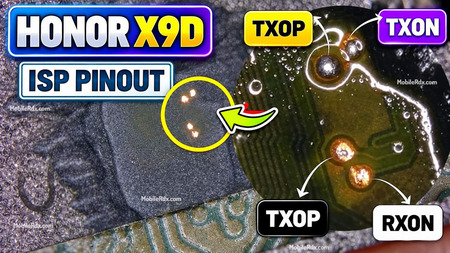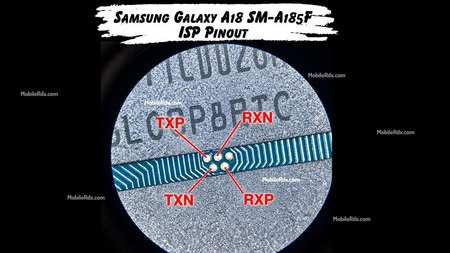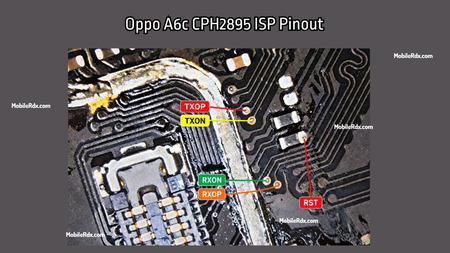

Here is the OnePlus 12 UFS ISP pinout using the without CPU drill board scratch method. Connect your UFI Box, Easy JTAG Plus, Medusa Pro II, or Flash64 directly to the motherboard test points to bypass FRP, write DUMP files, flash stock firmware, or fix dead boot. No need to drill the CPU package.
The OnePlus 12 (model CPH2581 / CPH2583 / PJD110) launched in December 2023 with a Qualcomm Snapdragon 8 Gen 3 (4 nm) chipset. It runs Android 14 with OxygenOS 14 and uses UFS 4.0 storage for internal memory. Standard eMMC ISP methods will not work here. You need a UFS-compatible programmer box.
What Is ISP Pinout?
ISP means In-System Programming. It lets you talk directly to the UFS or eMMC chip while it is still on the motherboard. No need to remove the chip. Just solder jumper wires to the test points on the PCB, connect them to a programmer box, and you can read, write, or erase data straight from the storage chip without going through the CPU.
Technicians use ISP for FRP bypass, dead boot repair, firmware flashing, MDM removal, and IMEI restoration on bricked or FRP-locked devices.
Without CPU Drill — Board Scratch Method
The OnePlus 12 uses a UFS 4.0 storage chip from Samsung or Micron. The test points are not always exposed as visible pads. You need to carefully scratch the PCB solder mask near the UFS chip area to reveal the copper traces underneath. Use a sharp blade under a microscope to expose the TXOP, TXON, RXOP, and RXON points. No CPU drill is required — the traces run from the UFS chip to the CPU, and you tap them mid-way.
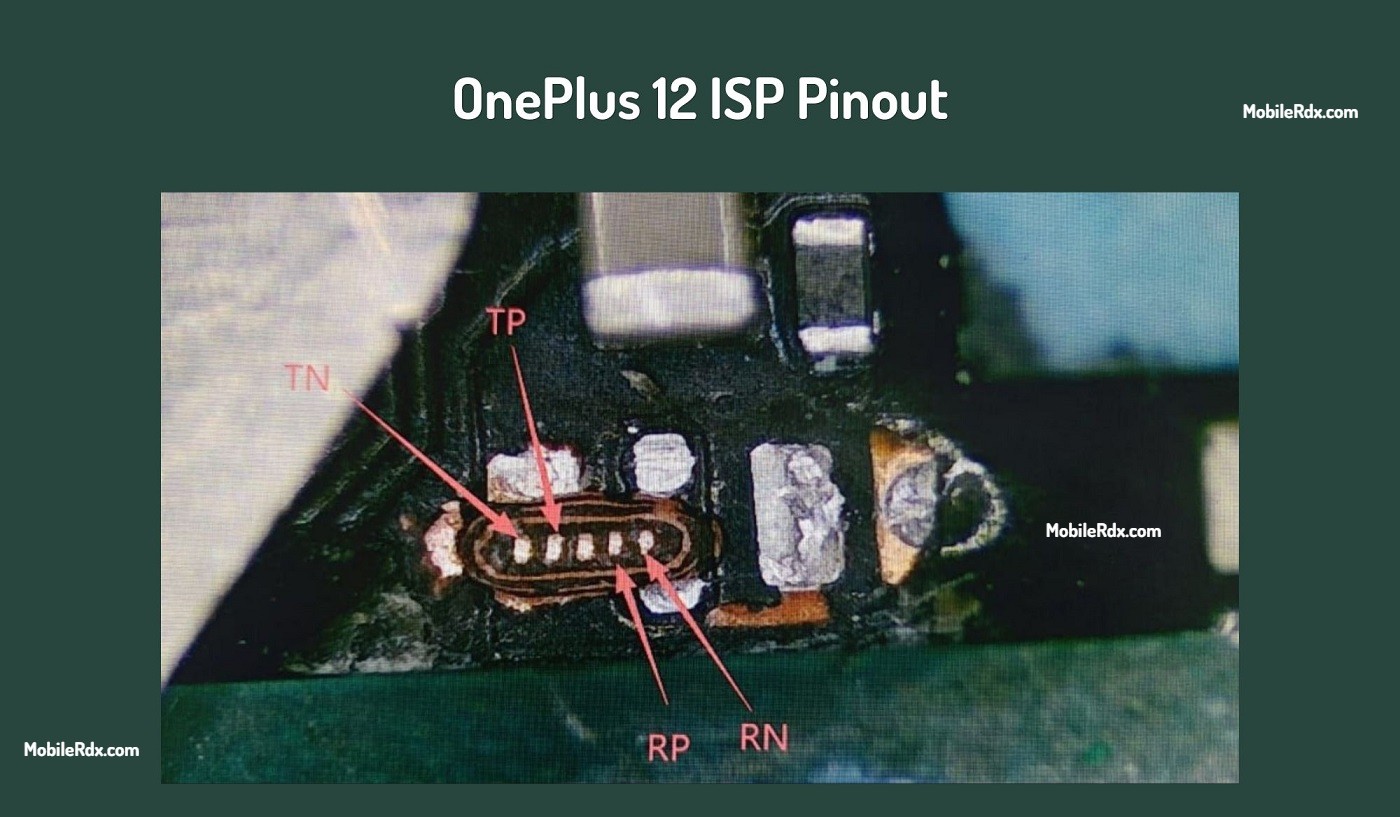
OnePlus 12 UFS ISP Pinout Diagram
Here is the working ISP pinout for the OnePlus 12. The test points are located on the main motherboard near the UFS chip area. You need to remove the EMI shield and scratch the PCB coating carefully to access the copper traces. Use a microscope or 10x magnifier.
Pinout Details (Without CPU Drill)
- TXOP: Transmit positive signal
- TXON: Transmit negative signal
- RXOP: Receive positive signal
- RXON: Receive negative signal
- VCC: Main power supply (2.5V or 3.3V)
- VCCQ: I/O power supply (1.8V)
- GND: Connect to any ground point on the board
Required Tools
Before you start, keep these tools ready:
- UFI Box, Easy JTAG Plus, Medusa Pro II, or Flash64 Ultra Box
- 0.1 mm to 0.3 mm jumper wires
- Fine-tip soldering iron
- Sharp blade for PCB scratch
- Soldering flux
- Isopropyl alcohol (IPA 99%) for cleaning
- Multimeter for continuity checks
- Microscope or 10x magnifier
How to Connect OnePlus 12 ISP to UFS Box
Follow these steps carefully:
- Remove the battery from the phone first. This prevents voltage issues during soldering.
- Remove the motherboard and place it on a clean work surface.
- Locate the UFS chip on the board and identify the trace area using the diagram above.
- Use a sharp blade under a microscope to scratch the solder mask on the TXOP, TXON, RXOP, and RXON traces.
- Apply a small amount of flux and solder jumper wires to the exposed copper traces.
- Connect a separate ground wire to any ground point on the board.
- Connect the wires to your UFS programmer box as per its pinout.
- Check each connection with a multimeter. Make sure there are no shorts between pins.
- Connect the UFS box to your PC and open the software (UFI Tool, Easy JTAG, or Medusa).
- Click Identify UFS or Detect Device to confirm the connection.
- Once detected, go to User Partition > Special Task > Reset FRP to bypass FRP, or pick the operation you need.
Caution: Scratching too deep can cut the PCB trace and ruin the board. Go slowly, use a microscope, and stop once you see the copper color. Shorting the wrong pins can also damage the motherboard.
Frequently Asked Questions
OnePlus 12 uses Qualcomm Snapdragon 8 Gen 3 (4 nm) paired with UFS 4.0 storage.
No. The test points can be accessed by scratching the PCB traces near the UFS chip. No CPU drill needed.
UFI Box, Easy JTAG Plus, Medusa Pro II, and Flash64 Ultra Box all work with this pinout.
Yes. Connect the pinout as shown and use the Reset FRP option in your UFS tool.
It means carefully scratching the PCB solder mask with a blade to expose the copper traces leading to the UFS chip, instead of drilling into the CPU.
Conclusion
The OnePlus 12 UFS ISP pinout lets technicians access the UFS 4.0 chip for FRP bypass, dead boot repair, and firmware flashing. No CPU drill required — just careful board scratch work under a microscope. Solder TXOP, TXON, RXOP, and RXON to your UFS box and always check continuity before powering up.